NPNew Pain Drugs
Independent evidence guide
Peripheral nerve pain signalling and selective sodium-channel research

The analgesic frontier

Relieve pain without trading it for another harm.

New peripheral targets aim to reduce addiction, tolerance, sedation, breathing suppression, nausea and constipation. The promise is real; the limits matter.

Explore new mechanisms
Relief How much and how fast?
Function Sleep, movement, work
Safety Organs and interactions
Dependence Addiction and withdrawal
Durability Tolerance and long-term evidence

The central problem

Strong analgesia often affects more than pain

Opioids act in brain and spinal pathways that also regulate breathing, reward and the gut. NSAIDs can injure the stomach, kidney and cardiovascular system. Gabapentinoids, antidepressants and cannabinoids can impair alertness.

The goal is not simply “opioid-free”. It is matched, multimodal care that improves function and quality of life at acceptable risk.

Approved and emerging

New ways to interrupt pain

Approval for acute pain does not prove benefit in chronic pain.

FDA APPROVED · ACUTE PAIN

Suzetrigine

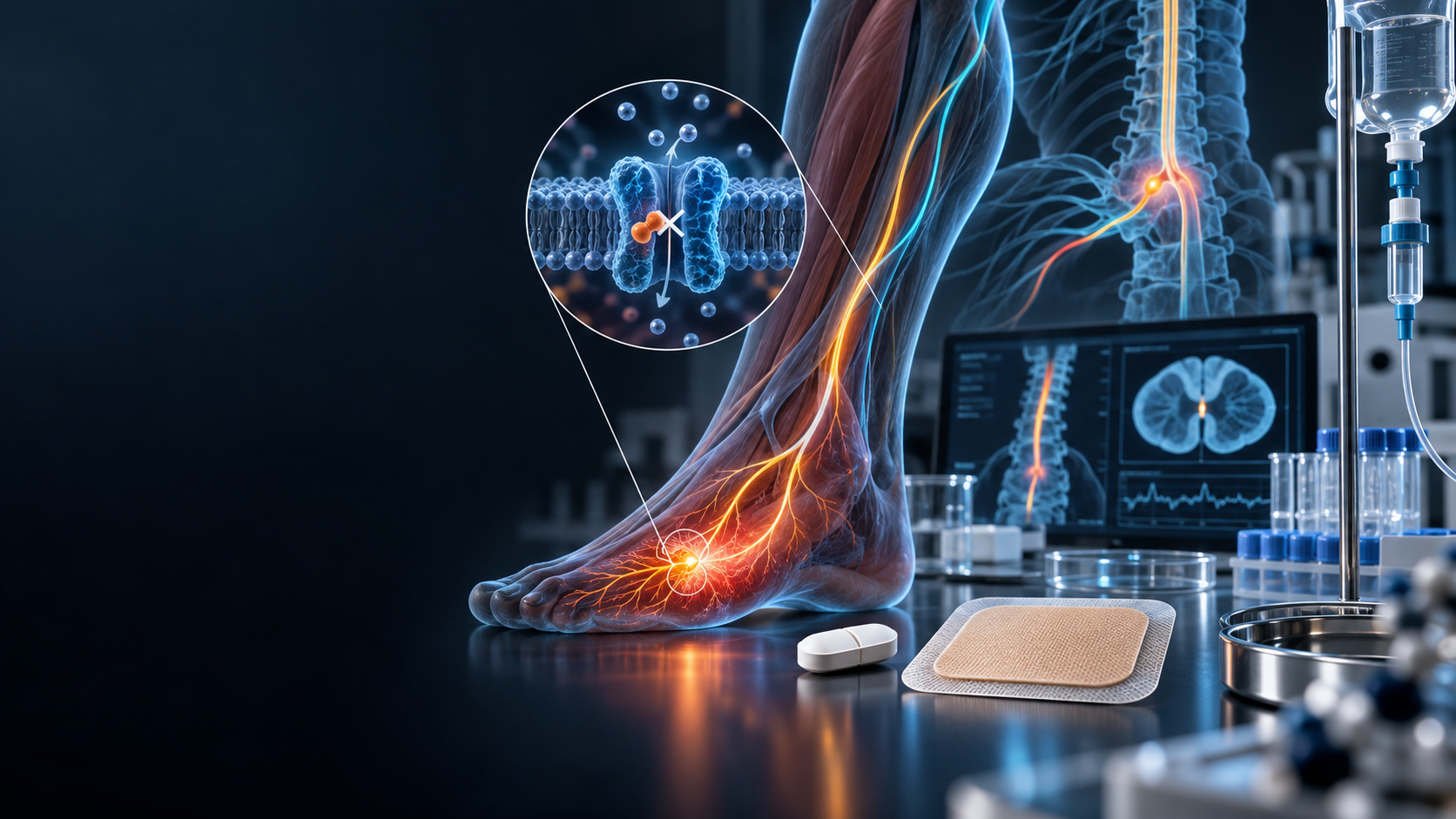
Journavx selectively inhibits peripheral NaV1.8 sodium channels before signals reach the brain. It is non-opioid and approved for moderate-to-severe acute pain in adults.

Limits
Not yet a universal chronic-pain drug; CYP3A interactions and grapefruit restrictions matter.
IN DEVELOPMENT

Next NaV1.8 inhibitors

Other selective peripheral sodium-channel blockers are in trials for acute and neuropathic pain, seeking stronger efficacy without central opioid effects.

MIGRAINE

CGRP pathway drugs

Monoclonal antibodies and gepants transformed migraine prevention and acute treatment for many people without opioid dependence.

NEUROPATHIC PAIN

Targeted combinations

Research spans sodium channels, potassium channels, neuroinflammation, antibodies and gene/RNA approaches. Most remain experimental.

LOCAL DELIVERY

Patches, injections and devices

Lidocaine and capsaicin patches, regional blocks and neuromodulation can target a site while reducing systemic exposure.

OLD DRUG · NEW USE

Repurposing

Low-dose naltrexone, ketamine protocols and cannabinoids attract interest, but indication, dose, evidence and monitoring vary greatly; online enthusiasm is not approval.

Match mechanism to pain

The diagnosis changes the drug

Acute nociceptive

Injury and surgery

Paracetamol, NSAIDs where safe, local anaesthesia, suzetrigine and short carefully selected opioid use can be combined.

Neuropathic

Burning, electric, shooting

Duloxetine, selected tricyclics, gabapentinoids and topical agents may help, but sedation, falls and withdrawal matter.

Inflammatory

Arthritis and tissue inflammation

Anti-inflammatory treatment, disease modification, exercise and local therapy can outperform escalating analgesics.

Nociplastic

Altered pain processing

Fibromyalgia-like pain often needs sleep, activity, psychological and selected medication strategies rather than opioids.

Cancer and palliative

Proportional relief

Opioids remain essential for many people. Radiation, nerve blocks, anti-cancer treatment and adjuvants may reduce dose burden.

Headache

Migraine-specific pathways

Triptans, gepants, ditans, CGRP antibodies and botulinum toxin are condition-specific; medication-overuse headache must be considered.
Compare harms, not labels

“Non-opioid” does not mean harmless

OPIOIDS

Breathing, addiction and constipation

Risk rises with dose, alcohol, benzodiazepines, sleep apnoea and frailty. Naloxone access can save lives. Tapering after long use should usually be gradual and collaborative.

NSAIDs

Bleeding, kidney and heart risk

Use the lowest effective dose for the shortest appropriate period; topical NSAIDs can reduce systemic exposure for local musculoskeletal pain.

GABAPENTINOIDS

Sedation and respiratory interaction

Dizziness, oedema, falls and withdrawal occur; breathing risk increases with opioids and other sedatives.

PARACETAMOL

Hidden duplication and liver injury

Combination cold and pain products can accidentally stack doses. Alcohol use, liver disease and low body weight affect safe limits.

Emergency: slow or stopped breathing, blue lips, inability to wake, severe confusion or suspected overdose requires emergency services and naloxone when available.

Evidence frontier

What a better analgesic must prove

Meaningful relief

Not just statistical change: responder rates, rescue medicine and function.

Durability

Acute trials cannot establish years of benefit or absence of tolerance.

Comparative safety

Fewer breathing, GI, kidney, cognitive and dependence harms in real patients.

Access

A safer drug has limited public-health value if price prevents use.

Related guides

Continue safely

A-Z medicine appendix

Generic names, brands and safety information

Approved labels describe approved uses; off-label pain use needs a separate evidence-and-risk discussion.

Off-label is not the same as experimental. Neither means it is suitable without clinical supervision.